- Patterns, Predictions, and Actions by Moritz Hardt and Benjamin Recht; PDF, problem sets.
- Learning Theory from First Principles by Francis Bach.
- Foundations of Machine Learning by Mehryar Mohri.
- Understanding Machine Learning: From Theory to Algorithms by Shai Shalev-Shwartz and Shai Ben-David
Archive
9,609 entries: 53 from X, 8,925 from Pinboard, saved 1998 to 2026.
Browse by tag, site, author, folder or language
Tags
- #python 396
- #programming 343
- #books 187
- #tutorial 187
- #javascript 153
- #webdesign 146
- #mathematics 130
- #blog 128
- #css 123
- #linux 113
- #reference 107
- #lisp 101
- #free 96
- #business 95
- #history 95
- #llm 95
- #productivity 95
- #design 91
- #statistics 90
- #opensource 85
- #gtd 83
- #r 80
- #lifehacks 78
- #ajax 77
- #graphics 77
- #visualization 77
- #datamining 75
- #typography 75
- #funny 74
- #photography 73
- #machine-learning 68
- #ai 67
- #plone 64
- #algorithms 63
- #database 62
- #kannada 61
- #india 59
- #education 58
- #learning 56
- #postgresql 55
Sites
- youtube.com 260
- news.ycombinator.com 224
- github.com 210
- en.wikipedia.org 161
- reddit.com 96
- amazon.com 71
- nytimes.com 70
- medium.com 69
- x.com 41
- code.google.com 34
- arxiv.org 33
- archive.org 28
- groups.google.com 28
- wired.com 27
- theatlantic.com 24
- theguardian.com 24
- bloomberg.com 21
- newyorker.com 21
- stackoverflow.com 21
- wsj.com 21
- en.m.wikipedia.org 19
- bbc.com 18
- plone.org 18
- goodreads.com 17
- btbytes.com 16
- btbytes.github.io 16
- old.reddit.com 16
- washingtonpost.com 16
- artima.com 15
- google.com 15
- thehindu.com 15
- onlamp.com 14
- www-128.ibm.com 14
- aws.amazon.com 13
- cs.cmu.edu 13
- economist.com 13
- thriftbooks.com 13
- atlasobscura.com 12
- informit.com 12
- smashingmagazine.com 12
Authors
- @pratikg 2
- @ShriramKMurthi 2
- @achumukundan00 1
- @antoniogm 1
- @BrankoMilan 1
- @Chris_arnade 1
- @code_star 1
- @coreyganim 1
- @DeepknowledgeU 1
- @dhh 1
- @dillon_mulroy 1
- @ElamBend 1
- @elisa_freschi 1
- @emollick 1
- @EmreSevinc 1
- @foxyjackfox 1
- @francoisfleuret 1
- @gabrielpeyre 1
- @GunduHuDuGa 1
- @hamsanandi 1
- @HistoryinStory 1
- @itometeam 1
- @karrisaarinen 1
- @kaushikcbasu 1
- @kmadathil 1
- @MistralAI 1
- @mprestonmeyer 1
- @NousResearch 1
- @npparikh 1
- @paulabartabajo_ 1
- @paulg 1
- @PEoperator 1
- @pmddomingos 1
- @ringer 1
- @RMantri 1
- @rockatanescu 1
- @RoundtableSpace 1
- @sebasbensu 1
- @seriesgraph 1
- @shanselman 1
Folders
Languages
Tags and folders
Showing 1–50 of 68#machine-learning ×
This month
2025
Machine Learning Books
Conformal Prediction
Heard it first time via Valeriy Manokhin on X. His feed often posts on well regarded mathematical learning materials on archive.org.
Introduction
- How statisticians got prediction wrong by Manokhin on X.
- Predicting with confidence: the best machine learning idea you never heard of by Scott Locklin, 2016.
Tutorials
- [2107.07511] A Gentle Introduction to Conformal Prediction and Distribution-Free Uncertainty Quantification
- Conformal Prediction by Ryan Tibshirani.
- A Tutorial on Conformal Prediction Journal of Machine Learning Research 9 (2008), by Glenn Shafer and Vladimir Vovk
Papers
Links
References
- Lei, G'Sell, Rinaldo, Tibshirani, Wasserman (2017). Distribution-Free Predictive Inference for Regression.
Reinforcement Learning: An Introduction : Andrew Barto and Richard S. Sutton : Internet Archive
archive.org
Textbook, second edition
Textbook, second edition
Lil'Log
lilianweng.github.io
good blog on LLM, Machine Learning etc
good blog on LLM, Machine Learning etc
2024
lakehq/sail
github.com
Drop-in Apache Spark replacement written in Rust, unifying batch processing, stream processing, and compute-intensive AI workloads.
Still being developed in November, 2026.
Drop-in Apache Spark replacement written in Rust, unifying batch processing, stream processing, and compute-intensive AI workloads.
Still being developed in November, 2026.
Speech and Language Processing
web.stanford.edu
Textbook by Dan Jurafsky and James H. Martin of Stanford
Textbook by Dan Jurafsky and James H. Martin of Stanford
2023
PCA
Principal Component Analysis is mostly commonly used for dimensionality reduction.
It is a data preperation technique performed on data prior to modeling. After data cleaning and data scaling and before training a predictive model.
A tutorial on Principal Components Analysis -- a technical report with code in scilab.
Implementing a Principal Component Analysis (PCA) in Python, step by step by Sebastian Raschka, who has written Machine learning and AI beyond the basics
ML Ops
MLOps Requirements

visenger/awesome-mlops: A curated list of references for MLOps
Papers
Operationalizing machine learning: An interview study (Shankar et al. 2022)
The process of operationalizing ML, or MLOps, consists of a continual loop of (i) data collection and labeling, (ii) experimentation to improve ML performance, (iii) evaluation throughout a multi-staged deployment process, and (iv) monitoring of performance drops in production. When considered together, these responsibilities seem staggering -- how does anyone do MLOps, what are the unaddressed challenges, and what are the implications for tool builders? We conducted semi-structured ethnographic interviews with 18 MLEs working across many applications, including chatbots, autonomous vehicles, and finance. Our interviews expose three variables that govern success for a production ML deployment: Velocity, Validation, and Versioning. We summarize common practices for successful ML experimentation, deployment, and sustaining production performance.
Unsolved Problems in MLOps - ACM Queue by Niall Murphy and Todd Underwood
Platforms
Frameworks
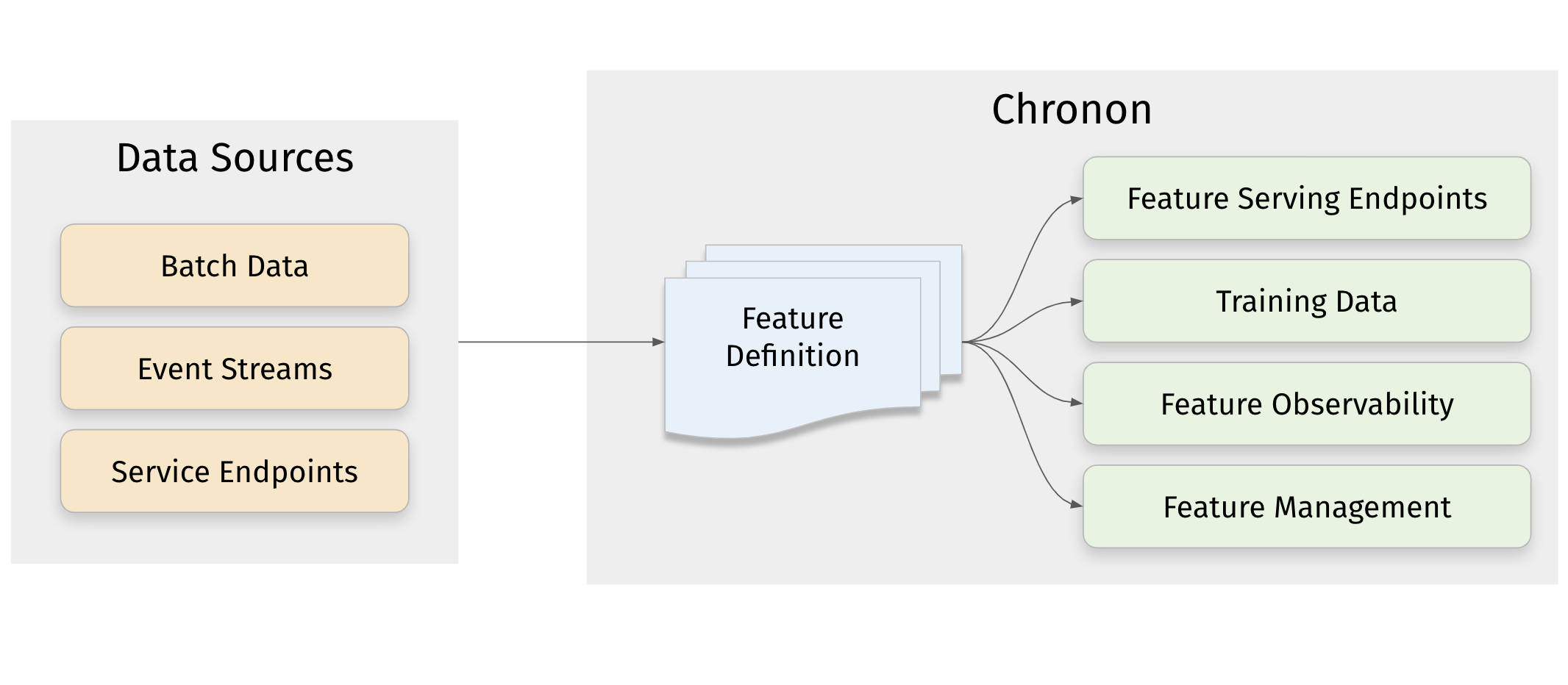
Chronon is an open source end-to-end feature platform that allows Machine Learning (ML) teams to easily build, deploy, manage and monitor data pipelines for machine learning. It’s currently used to power all major ML applications within Airbnb, as well as major use cases at Stripe. Airbnb and Stripe jointly manage and maintain the project.
Blog posts
References
- Shankar, Garcia, Hellerstein, Parameswaran (2022). Operationalizing Machine Learning: An Interview Study.
2022
Stanford CS229: Machine Learning | Summer 2019 (Anand Avati) - YouTube
youtube.com
Full course video on machine learning. I liked the instructor's style.
Full course video on machine learning. I liked the instructor's style.
2021
Thread by @TivadarDanka on Thread Reader App – Thread Reader App
threadreaderapp.com
2019
2018
Machine Learning
Learning
- How I learn machine learning | ★❤✰ Vicki Boykis ★❤✰; 2022.
- Machine Learning Engineer Roadmap | /home/vigi99
- ludwigbap/ml learning resources
- Stanford CS229: Machine Learning, Spring 2022 Notes)
- Lecture Videos Playlist on Youtube Learning from Data from Caltech; Youtube, also uses the eponymous textbook
When people are getting ready to learn machine learning at MSc level, they don’t learn from a course that says “if you don’t understand it it doesn’t matter”, they learn from this course instead. Abu-Mostafa’s Caltech course is probably the best first course that delivers good understanding of machine learning. via
Mathematics for Machine Learning by Marc Peter Deisenroth, A. Aldo Faisal, and Cheng Soon Ong.
Machine Learning for MacroEconomics by Jesús Fernández-Villaverde | University of Pennsylvania
Home | CS 229S; Systems for Machine Learning
Math For Machine Learning [Resources] at https://lelouch.dev
Resources
- franknielsen / Lists of curated books
- stas00/ml-engineering: Machine Learning Engineering Guides and Tools
- MAD - Machine learning, Artificial intelligence and Data; ( PDF chart of the landscape); related reading - The 2023 MAD (Machine Learning, Artificial Intelligence & Data) Landscape – Matt Turck; The interactive 2024 version
Video
- hu-po - YouTube; Livestreams on ML papers, Coding, Research.
Blogs
- Eugene Yan
- ApplyingML - Papers, Guides, and Interviews with ML practitioners by Eugene Yan
- Chip Huyen
- Leonie Monigatti, example see - 37 Things I Learned About Information Retrieval in Two Years at a Vector Database Company
Papers
Browse the State-of-the-Art in Machine Learning | Papers With Code
Pen and Paper Exercises in Machine Learning
This is a collection of (mostly) pen-and-paper exercises in machine learning. The exercises are on the following topics: linear algebra, optimisation, directed graphical models, undirected graphical models, expressive power of graphical models, factor graphs and message passing, inference for hidden Markov models, model-based learning (including ICA and unnormalised models), sampling and Monte-Carlo integration, and variational inference.
See also: machine-learning-books
2015
Comparing Python Clustering Algorithms
nbviewer.jupyter.org
(Why you should use HDBSCAN)
(Why you should use HDBSCAN)
2014
CMU 11-761 / Spring 2014 Language and Statistics
cs.cmu.edu
Internet search, speech recognition, machine translation, question answering, information retrieval, biological sequence analysis -- are all at the forefront of this century’s information revolution. In addition to their use of machine learning, these technologies rely heavily on classic statistical estimation techniques. Yet most CS and engineering undergraduate programs do not prepare students in this area beyond an introductory probability & statistics course. This course is designed to address this gap.
The goal of "Language and Statistics" is to ground the data-driven techniques used in language technologies in sound statistical methodology. We start by formulating various language technology problems in both an information theoretic framework (the source-channel paradigm) and a Bayesian framework (the Bayes classifier). We then discuss the statistical properties of words, sentences, documents and whole languages, and the various computational formalisms used to represent language. These discussions naturally lead to specific concepts in statistical estimation.
10601A14spring Machine learning
sites.google.com
Machine Learning (ML) asks "how can we design programs that automatically improve their performance through experience?" This includes learning to perform many types of tasks based on many types of experience, e.g. spotting high-risk medical patients, recognizing speech, classifying text documents, detecting credit card fraud, or driving autonomous robots.
Topics covered in 10-601A include concept learning, version spaces, decision trees, neural networks, computational learning theory, active learning, estimation & the bias-variance tradeoff, hypothesis testing, Bayesian learning, the Minimum Description Length principle, the Gibbs classifier, Naïve Bayes classifier, Bayes Nets & Graphical Models, the EM algorithm, Hidden Markov Models, K-Nearest-Neighbors and nonparametric learning, reinforcement learning, genetic algorithms, bagging and boosting.
Learning from the best | no free hunch
blog.kaggle.com
understand how they were consistently performing well in competitions.
understand how they were consistently performing well in competitions.
10708 Probabilistic Graphical Models
cs.cmu.edu
2013
Alexandre Passos's ML blog
atpassos.me
datasets released by Google
svonava.com
A Course in Machine Learning
ciml.info
book by Hal Daume III
book by Hal Daume III
Machine Learning Resources
sciencemag.org
The Shape of Data | Exploring the geometry behind machine learning, data mining, etc.
shapeofdata.wordpress.com
EE364a: Convex Optimization I
stanford.edu
recommended by someone on Quora as requisite math for learning Machine Learning.
recommended by someone on Quora as requisite math for learning Machine Learning.
Machine Learning: A Probabilistic Perspective (Adaptive Computation and Machine Learning series): Kevin P. Murphy: 9780262018029: Amazon.com: Books
amazon.com
has tips by reviewers on other books + guide on which ones to take up depending on time/learning objectives.
has tips by reviewers on other books + guide on which ones to take up depending on time/learning objectives.
2012
T-61.6020 Popular Algorithms in Data Mining and Machine Learning
cis.hut.fi
implments popular algorithms in datamining.
implments popular algorithms in datamining.
CSEP 546 - Data Mining - Spring 2012
cs.washington.edu
2011
Waffles
waffles.sourceforge.net
C++ data machine learning library.
C++ data machine learning library.
Machine learning papers from NIPS 2011
biglearn.org
Papers from NIPS2011 workshop on parallel and large-scale machine learning
Papers from NIPS2011 workshop on parallel and large-scale machine learning
shogun | A Large Scale Machine Learning Toolbox
shogun-toolbox.org
Machine Learning Exercises in R
al3xandr3.github.com
2010
The Gaussian Processes Web Site
gaussianprocess.org
Pattern Recognition and Machine Learning by Christopher M. Bishop
research.microsoft.com
Guide to Getting Started in Machine Learning | A Beautiful WWW
abeautifulwww.com
Statistics is a very interesting subject, and it is a distinct subject from math...
news.ycombinator.com
Recommendations on free books on statistics
Recommendations on free books on statistics
Tikhonov regularization - Wikipedia, the free encyclopedia
en.wikipedia.org
Deep Learning
deeplearning.net
natural language processing blog
nlpers.blogspot.com
Inherent Uncertainty
inherentuncertainty.org
Zero Intelligence Agents
drewconway.com
Zero Intelligence Agents is a blog on social science, math and computer science applied "national security".
Zero Intelligence Agents is a blog on social science, math and computer science applied "national security".
Pin Dancing: Learning about Machine Learning
pindancing.blogspot.com
Measuring Measures: Learning About Statistical Learning
measuringmeasures.blogspot.com
@satchit good question. I have a list in my head that i should put online. I was inspired by this:
@satchit good question. I have a list in my head that i should put online. I was inspired by this: