here you goThings I’ve made, read and saved — shared here.

Archive

9,565 entries: 46 from X, 8,923 from Pinboard, saved 1998 to 2026.

Browse by tag, site, author, folder or language

Tags

Sites

Authors

Folders

Languages

Showing 1–50 of 67#ai ×

This month

April 2026

March 2026

January 2026

2025

Horseless intelligence | Ned Batchelder

nedbatchelder.com

My advice about using AI is simple: use AI as an assistant, not an expert, and use it judiciously. Some people will object, “but AI can be wrong!” Yes, and so can the internet in general, but no one now recommends avoiding online resources because they can be wrong. They recommend taking it all with a grain of salt and being careful. That’s what you should do with AI help as well.

Flow Matching and Diffusion Models

diffusion.csail.mit.edu

Diffusion and flow-based models have become the state of the art for generative AI across a wide range of data modalities, including images, videos, shapes, molecules, music, and more! This course aims to build up the mathematical framework underlying these models from first principles. At the end of the class, students will have built a toy image diffusion model from scratch, and along the way, will have gained hands-on experience with the mathematical toolbox of stochastic differential equations that is useful in many other fields. This course is ideal for students who want to develop a principled understanding of the theory and practice of generative AI.

Sky-T1: Train your own O1 preview model within $450

novasky-ai.github.io

Stanford's Sky Lab announced the "Sky-T1" model that performs competitively in reasoning and coding while comparison to OpenAI's o1 model, while using a small compute budget.

They set about to produce this open-weights model because the current leaders like o1 and gemini 2.0 flash thinking while excel in reasoning, showing the ability to solve complex tasks by producing a long internal chain of thought, among other advancements. However, the technical details and model weights are un-accessible.

Summary:

  • They used QwQ to generate training data (with some cleanup using GPT-4o-mini)
  • The training data was then used to FT Qwen2.5-32B-Instruct (non-reasoning model)
  • Result was that Sky-T1 performs slightly worse than QwQ but much better than Qwen2.5 on reasoning tasks.

This is pretty interesting as it shows how you can FT a foundation model to do better at reasoning.


Inference time compute is still underutilized for AI deployments. It is better to distill the reasoning from larger models like R1 for specific tasks. Even better, one can mix in custom thinking instructions for specific sub-problems, so that a fine-tuned model learns o mix of task specific reasoning and custom logic. This can often beat custom prompt iteration. 🔗

This Guide: Train a Reasoning Model | Kiln AI Docs goes into how to distill for thinking models.

2024

2023

Segment Anything Model

Segment Anything -- The Segment Anything Model (SAM) produces high quality object masks from input prompts such as points or boxes, and it can be used to generate masks for all objects in an image. It has been trained on a dataset of 11 million images and 1.1 billion masks, and has strong zero-shot performance on a variety of segmentation tasks.

YavorGIvanov/sam.cpp -- Inference of Meta's SAM in pure C/C++

See also: ggml

notes#ai#generative-ai

transformers

8 Google Employees Invented Modern AI. Here’s the Inside Story | WIRED

Transformers from Scratch

Transformers were introduced in this 2017 paper as a tool for sequence transduction—converting one sequence of symbols to another. The most popular examples of this are translation, as in English to German. It has also been modified to perform sequence completion—given a starting prompt, carry on in the same vein and style. They have quickly become an indispensible tool for research and product development in natural language processing.

The Python Library

Transformers provides APIs and tools to easily download and train state-of-the-art pretrained models.. save you the time and resources required to train a model from scratch. These models support common tasks in different modalities, such as:

  • NLP - text classification, named entity recognition, question answering, language modeling summerization, translation, mulitple choice, and text generation.
  • Computer vision - image classification, object detection, and segmentation
  • Audio - automatic speech recognition and audio classification
  • Multimodal - table question answering, optical character recognition, information extraction from scanned documents, video classification and visual question answering.

transformers support interop between pytorch, tensorflow, and jax. WIth this one can use a diff framework at each stage of a model's lifecycle; train, load, and inference. models can be exported to format like ONNX and torchscript for deployment in prod envs.

Read the documentation here : https://huggingface.co/docs/transformers/index


Sentence Transformers (sbert)

Python module for accessing, using, and training state-of-the-art text and image embedding models. It can be used to compute embeddings using Sentence Transformer models (quickstart) or to calculate similarity scores using Cross-Encoder models (quickstart). This unlocks a wide range of applications, including semantic search, semantic textual similarity, and paraphrase mining.

notes#ai#huggingface#llm

Hugging Face

Hugging Face is a company that focuses on natural language processing (NLP) and artificial intelligence (AI) research. They are best known for their open-source library called "transformers," which provides state-of-the-art general-purpose architectures for NLP tasks. These architectures include BERT, GPT, RoBERTa, T5, and others, which are pre-trained on large datasets and can be fine-tuned for specific tasks such as sentiment analysis, machine translation, question-answering, and more.

Hugging Face's mission is to advance AI research and democratize access to powerful NLP tools for developers, researchers, and organizations. Their platform offers an ecosystem of resources, including pre-trained models, datasets, and community-contributed tools, making it easier for users to implement and experiment with cutting-edge NLP technologies.

Getting started instructions

2023-05-07From their website on creating a new account:

Getting started with our git and git-lfs interface

If you need to create a repo from the command line (skip if you created a repo from the website)

$ pip install huggingface_hub
$ huggingface-cli login
$ huggingface-cli repo create repo_name --type {model, dataset, space}

Clone your model or dataset locally

Make sure you have git-lfs installed (https://git-lfs.github.com)

$ git lfs install
$ git clone https://huggingface.co/username/repo_name

Then add, commit and push any file you want, including larges files

# save files via `.save_pretrained()` or move them here
$ git add .
$ git commit -m "commit from $USER"
$ git push

In most cases, if you're using one of the compatible libraries, your repo will then be accessible from code, through its identifier: username/repo_name.

For example for a transformers model, anyone can load it with:

 tokenizer = AutoTokenizer.from_pretrained("username/repo_name") model = AutoModel.from_pretrained("username/repo_name")](https://huggingface.co/welcome)

-- Deploy Evidence on Hugging Face Spaces; see evidence.
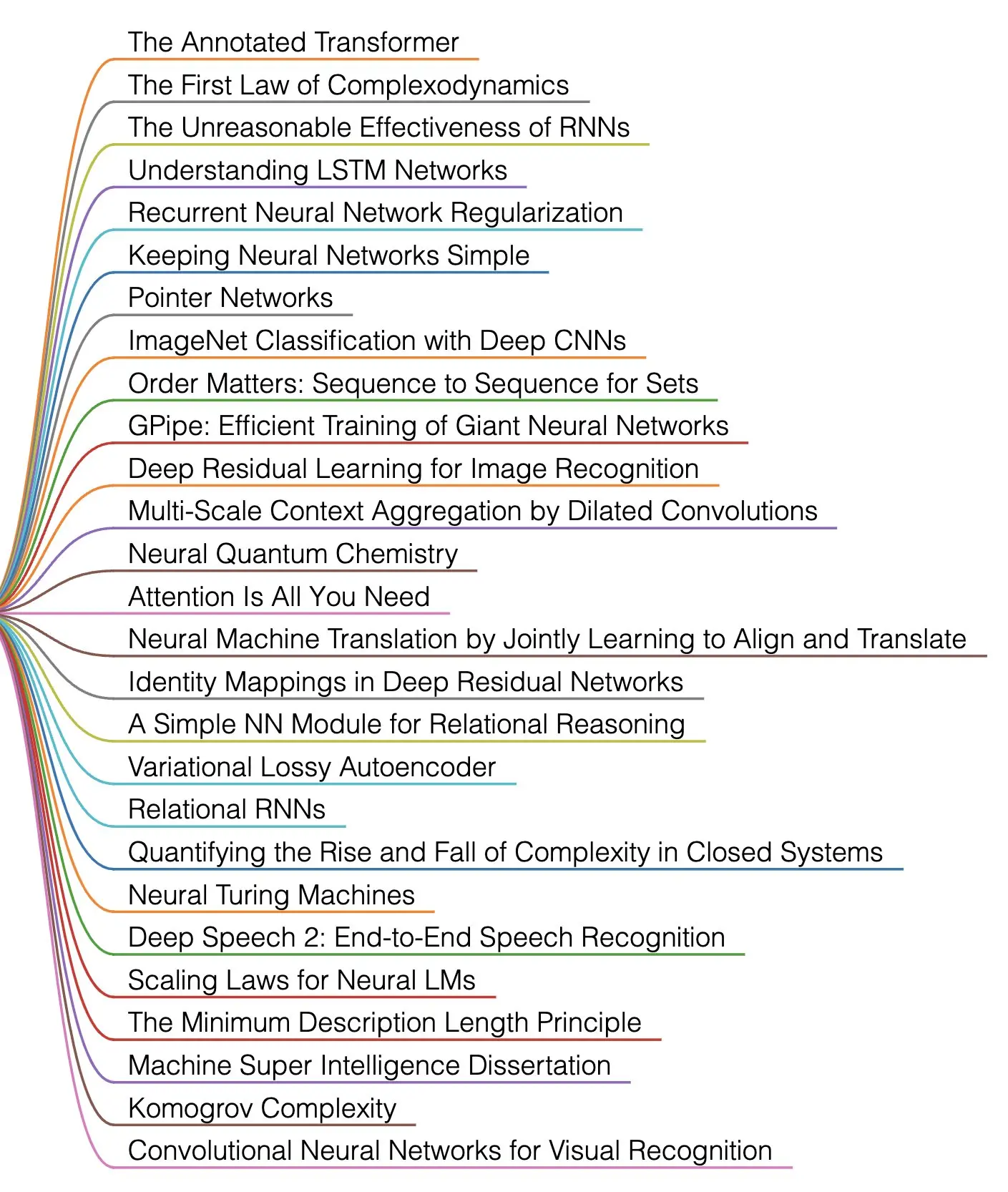
notes#ai#huggingface#llm

2022

CS230

2022-11-27

AI Classes often discuss - Deep learning, Machine learning, Probabilistic Graphical Models, Planning algorithms (eg: motion planning), Search algorithms, Knowledge representation (knowledge graphs), Game theory.

Deep learning was much more attractive brand compared to Neural networks.

The DL/ML field has taken off, driven by more data and more computation, and the positive feedback loop by users; lot of Algorithmic innovations.

Software Design Book by John Ousterhout

"collect more data" vs "tune hyper parameters" - systematic approach to making this decision is the distinction between a beginner and a experienced person.

notes#ai#deep-learning

2012

2011

Clever Algorithms

cleveralgorithms.com

The book "Clever Algorithms: Nature-Inspired Programming Recipes" by Jason Brownlee PhD describes 45 algorithms from the the field of Artificial Intelligence. All algorithm descriptions are complete and consistent to ensure that they are accessible, usable and understandable by a wide audience.

2010

2009