Introductory article - GEPA Deepdive – Risheekkumar Baskaran and follow up Programmatic Prompt Optimization: Replacing Intuition with Algorithms.
See dspy's GEPA tutorial.
9,565 entries: 46 from X, 8,923 from Pinboard, saved 1998 to 2026.
Showing 1–50 of 112Folder notes ×2025 ×Clear all
Introductory article - GEPA Deepdive – Risheekkumar Baskaran and follow up Programmatic Prompt Optimization: Replacing Intuition with Algorithms.
See dspy's GEPA tutorial.
What are your side quests?
Nomad is a simple and flexible scheduler and orchestrator to deploy and manage containers and non-containerized applications across on-prem and clouds at scale.
It is often touted as a simpler alternative to kubernetes.
Read Running Nomad for home server | Karan Sharma from 2021 for "When to use Nomad".
flowy screen recorder & editor App for #macos
Video: The 529 Plan Just Got A Big Upgrade in 2025. Basically, unused funds in 529 can be rolled over into your child's IRA account. More details here: Understanding 529 rollovers to a Roth IRA
I worked for Microsoft from 2021-2023 via an acquistion of RiskIQ.
‘Good at math’ now means actually being able to build models. You don't need to manipulate endless series of equations; you can Cursor a few MC simulations and see the results. -- via
See Beads by people/Steve-Yegge
ensue-skill: Show HN: Stop Claude Code from forgetting everything | Hacker News
We built a shared memory layer you can drop in as a Claude Code Skill. It’s basically a tiny memory DB with recall that remembers your sessions. Not magic. Not AGI. Just state.
Install in Claude Code:
  /plugin marketplace add https://github.com/mutable-state-inc/ensue-skill
  /plugin install ensue-memory
  # restart Claude Code
What it does: (1) persists context between sessions (2) semantic & temportal search (not just string grep). Basically git for your Claude brain.
What is the Ralph Wiggum Approach?
RW is an AI coding approach that lets you run seriously long-running AI agents (hours, days).
Self-driving cars are way safer than human drivers -- Please let the robots have this one - by Kelsey Piper; Nov 2025.
Learning How to Learn - Dissident Teacher
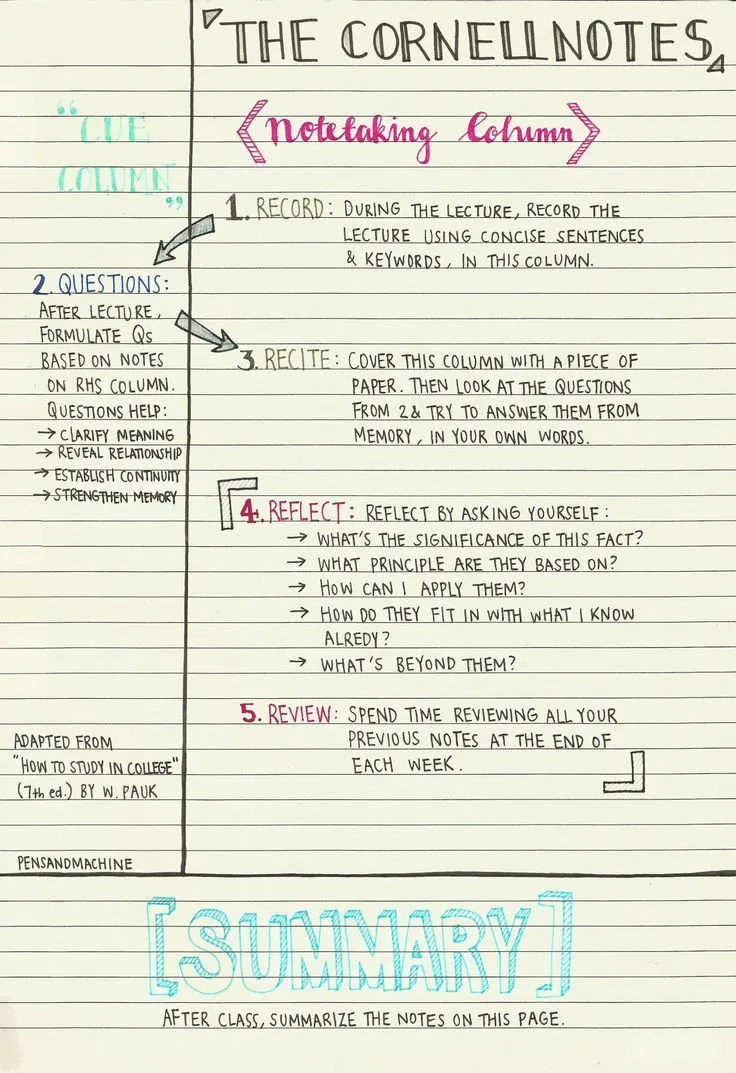
Cornell Notes offer the biggest bang for the buck when it comes to processing new information, i.e., learning.
I came across "The Harada Method" used by baseball star Shohei Ohtani via this tweet

The Harada Method was created by Takashi Harada, a Japanese junior high track coach. He took a team ranked last out of 380 schools and, using his system, turned them into the #1 team in the region within 3 years. They held that top spot for the next 6 years.
You start by placing your main goal in the center of an 8x8 grid.
Next, identify 8 critical supporting pillars needed to achieve that goal. These surround the main goal.
then break down each of those 8 pillars into 8 smaller, actionable tasks or daily routines.
This fills out the entire 64-cell grid, turning a massive dream into a concrete, daily action plan.
The method goes far deeper than just technical skills. It forces you to analyze your weaknesses and build confidence. It also has a highlight on service to others, emphasizing that humility and contributing to your community are essential for personal success. The key to the system is daily execution and accountability. Once the 64-cell chart is complete, you turn the tasks and habits into a daily diary and a "Routine Check Sheet." It’s designed to transform abstract intentions into a measurable, daily practice.
Collaborative Robot.
Intro video - Industrial Robots vs. Collaborative Robots | A Clear Winner? - YouTube
low skilled tasks like:
Features:
Major Players:
Cobot consultation: Neff automation based in Indianapolis.
SendCutSend - How They Became America’s #1 Manufacturer - YouTube
Manufacturers:
Concepts:
Scripts I wrote that I use all the time -- This is a neat page, and a concept worth copying (ie., make this page into that).
In the meantime, my scripts are over at GitHub - btbytes/scripts and also see my gist page.
Hyperflask is built on top of Flask, introduces component-driven architecture to Flask apps. Seamlessly create frontend (web components, react, etc...) and backend components and use them in your jinja templates. Use HTMX to create server-backed interactive components... file-based routing using a new file format that combines python code and a jinja template (inspired by Astro pages). Uses DaisyUI.
See also Litestar
Notes on RAG from the creator of GitHub - agentset-ai/agentset -- open-source platform to build, evaluate, and ship production-ready RAG and agentic applications. It provides end-to-end tooling: ingestion, vector indexing, evaluation/benchmarks, chat playground, hosting, and a clean API with first-class developer experience.
Collaborative robot automation | Productive Robotics is an American Industrial cobot manufacturer. Heard via - He Makes High-End Film Gear in the Tiniest CNC Machine Shop Ever | Possum Solutions Shop Tour - YouTube

HackMD is a collaborative online service for sharing and editing markdown documents.
Some nifty features I liked - exporting to github repo. Publishing markdown documents as standalone pages. e.g: this page.
My hackmd page is -- HackMD/@btbytes
Docling: The Document Alchemist from Towards Data Science. Has a good code tutorial on how to use Docling to extract text, tables, and using OCR to extract hard to extract content.
IBM Granite-Docling: End-to-end document understanding
This dataset was developed using docling: HuggingFaceFW/finepdfs · Datasets at Hugging Face
--
Docling + Go + Bob: The Modern Document Stack
desktop application engineered in Go that brings the power of IBM’s Docling service directly the users’ fingertips. Built with the sleek Fyne framework, this application transforms the complex task of document conversion into an intuitive, point-and-click experience. where IBM Bob is a AI chatbot for code IDEs.
Milvus started out as "Vector Similarity Search", but recently has rebranded as "Vector Database" in-line with current phrasing. Zilliz: Vector Database is the Cloud hosted version of Milvus. Read Vector Database Stories over at Zilliz's blog.
Watched a couple videos of Laser Welding by Rex Alexandre of Handheld Laser Institute
Malloy a modern language for analyzing,
transforming, and modeling data.
run: duckdb.table('../data/airports.parquet') -> {
  select:
    id
    code
    city
  limit: 10
}
is equivalent to SELECT id, code, city FROM airports LIMIT 10 in SQL.
In Malloy, all output fields have names.
One of the main benefits of Malloy is the ability to save common calculations into a data model. The data model is made of sources, which can be thought of as tables or views, but with additional information, such as joins, dimensions and measures.
source: airports is duckdb.table('../data/airports.parquet') extend {
  dimension: county_and_state is concat(county, ', ', state)
  measure: airport_count is count()
  measure: average_elevation is avg(elevation)
}
source can be imported into another using an import statement -- import "airports.malloy"
Sources can also contain named views.
Joins are also declared as part of sources:
source: flights is duckdb.table('../data/flights.parquet') extend {
  join_one: aircraft on tail_num = aircraft.tail_num
}
where is used for filtering. Filtering can be applied to aggregate calculation (a mesure)
nested views produce with subtables.
Literals of type date and timestamp are notated with an @, e.g. @2003-03-29 or @1994-07-14 10:23:59. Similarly, years (@2021), quarters (@2020-Q1), months (@2019-03), weeks (@WK2021-08-01), and minutes (@2017-01-01 10:53) can be expressed.
There is a special time literal now, referring to the current timestamp, which allows for relative time filters.
Numeric values can be extracted from time values, e.g. day_of_year(some_date) or minute(some_time)
Time ranges -- @2003 to @2005
The output from one stage of a query can be passed into another stage using -> ( Pipeline )
I was interested in learning to read Arabic script and even bought a book with CD on it, in early 2020s. Didn't get around to it, and I left the book in India.
This is an interesting tutorial - Writing Arabic in English.
Jujutsu is a version control system with a significantly simplified mental model and command-line interface compared to Git, without sacrificing expressibility or power (in fact, you could argue Jujutsu is more powerful). Stacked-diff workflows, seamless rebases, and ephemeral revisions are all natural with
-- from Jujutsu For Busy Devs | maddie.wtf; Jul 2025.jj, and it uses Git as a backend, which means you can begin using it non-destructively with a single command and can always drop back down to Git if you need to.
I'm still investigating (Aug, 2025), and hope to slowly learn why and how. Perhaps more links to read.
See also: Jujutsu for everyone, and Switch to Jujutsu already
Nano Banana — Google's Next-Gen Image Editing AI (Free to Try) | Nano Banana
Precise, controllable, and consistent image edits with mask-free inpainting, layout-aware outpainting, and conversational refinement.
See examples on the page.
llama.cpp guide: running gpt-oss with llama.cpp
brew install llama.cpp
llama-server -hf ggml-org/gpt-oss-20b-GGUF \
  --ctx-size 0 --jinja -ub 2048 -b 2048 -ngl 99 -fa
This downloads a 12GB model file from ggml-org/gpt-oss-20b-GGUF on Hugging Face, stores it in ~/Library/Caches/llama.cpp/ and starts it running on port 8080.
You can then visit this URL to start interacting with the model: http://localhost:8080/
shortcut.ai -- AI powered Excel sheet. Not free $40/mo min.

Came to know about Task specific pruning via this X/MaximeRivest post. See (Reda et al. 2025)
Pruning might be useful for niche languages. (I am thinking of Nim after reading this thread earlier)
Using OpenAI API for Sentiment Analysis by Ashwin Malshe; Code - GitHub:ashgreat/Sentiment-Analysis-OpenAI. The usual/classic way of doing Sentiment Analysis is using NLP.
#todo #exercise rewrite the same using dspy.
jailbreaking it takes 5 minutes and turns it into one of the cheapest, most capable eInk devices you can own. Runs Linux! -- via x/dqmonn
I have been using Hetzner for a while, and this page is to keep notes on things that might be beneficial on Hetzner.
Why use Dokploy -- DIY Serverless (with coreOS + dokploy)
load that VPS with a bomb-proof no-config OS like coreOS, and put Dokploy on it for a no-fuss container service UI. It gives you the hassle-free experience of a Heroku-like platform, but with the cost and independence of a VPS.
This way you can have your cake and eat it too: most of the benefits of serverless, with most of the benefits of running your own VPS.
Similar software mentioned in this HN discussion of the above article: Harbormaster
The gap between AI demos and production isn't about reasoning quality anymore, it's about context.
Three critical lessons worth stealing:
• Build custom UIs that optimize for high-quality reviews, not just volume • Collect four outputs from every review: performance metrics, failure modes, suggested improvements, and input-output pairs • Use these to create failure mode datasets you can continuously test against
• Modern LLMs already have strong domain reasoning, they lack customer-specific context • Skip the brittle prompt engineering and focus on context augmentation instead • Use domain knowledge retrieval at inference time to inject customer-specific definitions and workflows
• Monitor production outputs with domain expert reviews (start with humans, not LLM judges) • Define clear sampling strategies as you scale: uncertainty-based, outlier detection, stratified sampling • Have response protocols ready when performance dips below SLAs
An important question to ask is: What's your system for incorporating domain expertise?
Teams pay too much attention to model selection but neglect the process for continuously baking in expert knowledge. Reliable vertical AI implementations aren't just about picking the right model, they're about building flywheels that systematically improve with use.
LanceDB · GitHub where
lake house = data lake + data warehouse.
stores raw, unstructured, and semi-structured data cheaply, often on object-storage like a data lake.
supports ACID transactions, structured data, schema enforcement, and fast SQL based Analytical Queries.
Basically, lakehouse = store all your data, and run different kind of loads on them - analytics, machine learning, Bi etc, without moving around data.
Common solutions include: Databricks lakehouse, Apache Iceberg, Apache Hudi, Delta Lake, LanceDB etc.,
Qwen-Image lightning generation on Apple Silicon:
$ uv run https://raw.githubusercontent.com/ivanfioravanti/qwen-image-mps/refs/heads/main/qwen-image-mps.py -f -p "Generate an SVG of a pelican riding a bicycle"
This will download 1.7GB of Lora in the folder you start it from. 9:35:30-
--
Qwen-Image-Edit: Image Editing with Higher Quality and Efficiency; Aug 2025.
uv run https://raw.githubusercontent.com/ivanfioravanti/qwen-image-mps/refs/heads/main/qwen-image-mps.py generate -f -p "A rollercoaster with view on Carmel, IN Midtown"
(Vaibhav Gupta and team 2024) is a simple prompting language for building reliable AI workflows and agents by BoundaryML. GitHub - BoundaryML/baml: The AI framework that adds the engineering to prompt engineering. Available for Python, typescript, golang, java etc.,
BAML makes prompt engineering easy by turning it into schema engineering -- where you mostly focus on the models of your prompt -- to get more reliable outputs.
New syntax can be incredible at expressing new ideas. Plus the idea of maintaining hundreds of f-strings for prompts kind of disgusts us 🤮. Strings are bad for maintainable codebases. We prefer structured strings.
The goal of BAML is to give you the expressiveness of English, but the structure of code.
Half the error rate, just by changing the way the schema is expressed to the LLM ! I think the lesson learned here is that:
- Easier to read for humans usually means easier to read for LLMs as well
- JSON is not easy to read for humans -- X/appenz
The new BAML adapter (which subclasses the existing JSON adapter) avoids using JSON schema for formatting the data model in the prompt. Instead, it uses the format popularized by BAML, and it instantly improves the quality of structured outputs. -- X/tech_optimist Using the BAMLAdapter in dspy is incredibly simple - just pass it as a parameter to your LM, and the adapter takes care of the rest.
import dspy
from pydantic import BaseModel, Field
from typing import Literal
from dspy.adapters.baml_adapter import BAMLAdapter

# 1. Define Pydantic models
class PatientAddress(BaseModel):
    street: str
    city: str
    country: Literal["US", "CA"]

class PatientDetails(BaseModel):
    name: str = Field(description="Full name of the patient.")
    age: int
    address: PatientAddress | None

# 2. Define a signature using the Pydantic model as an output field
class ExtractPatientInfo(dspy.Signature):
    '''Extract patient information from the clinical note.'''
    clinical_note: str = dspy.InputField()
    patient_info: PatientDetails = dspy.OutputField()

# 3. Configure dspy to use the custom adapter
llm = dspy.OpenAI(model="gpt-4.1-mini")
dspy.configure(lm=llm, adapter=BAMLAdapter())

# 4. Run your program
extractor = dspy.Predict(ExtractPatientInfo)
note = "John Doe, 45 years old, lives at 123 Main St, Anytown. Resident of the US."
result = extractor(clinical_note=note)
print(result.patient_info)

# Expected output:
# PatientDetails(
#    name='John Doe',
#    age=45,
#    address=PatientAddress(street='123 Main St', city='Anytown', country='US'))
Collection of "Awesome X" collections.
Collection of LLM papers: GitHub - horseee/Awesome-Efficient-LLM: A curated list for Efficient Large Language Models by Xinyin Ma.
Microsoft LMOps -- a research initiative on fundamental research and technology for building AI products w/ foundation models, especially on the general technology for enabling AI capabilities w/ LLMs and Generative AI models.
Extracting structured information from unstructured text using LLMs is a good tool to have in your llm toolkit.
Google's langextract is one such python library for extracting structured information from unstructured text using LLMs with precise source grounding and interactive visualization.
The other popular library is Instructor -- extracting structured data from Large Language Models (LLMs). Built on top of Pydantic, Instructor provides type-safe data extraction with automatic validation, retries, and streaming support. supports all major providers like openai, claude and local-llm like ollama etc.,
